Destroying the Gluten-Free Myth
One in three Americans is now avoiding gluten. Researchers say only 1 in 100 actually needs to. Here's what's making the rest miserable — and the fix that has nothing to do with avoiding wheat.
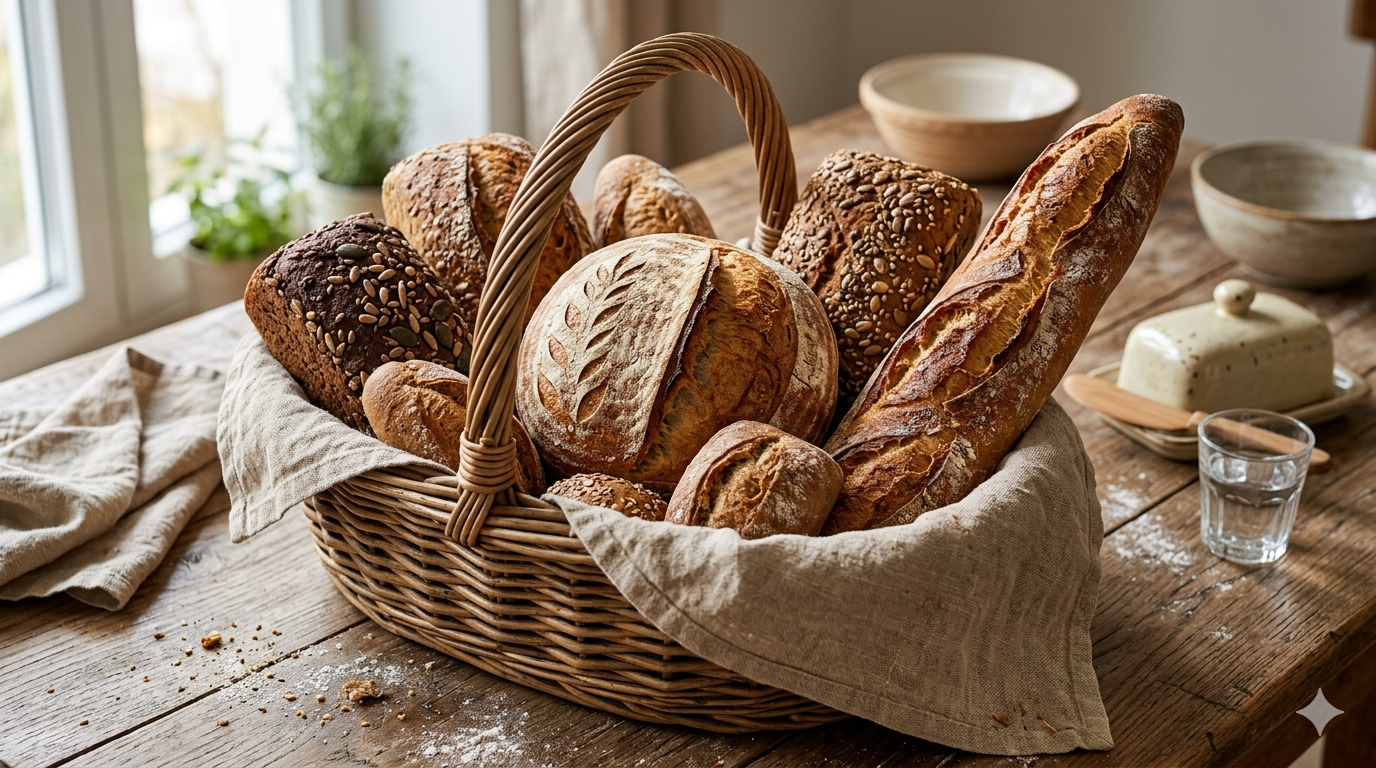
The Scene Playing Out at Every Restaurant in America
At restaurants across America, something has quietly changed at the dinner table.
Walk into any decent Italian restaurant on a Friday night and count the tables where someone is negotiating with the waiter: no pasta please, can we substitute something for the bread, what exactly is in that sauce? Listen to the conversations: "I can't eat that." "Is there gluten in this?" "Would the kitchen be able to…"
One in three Americans is now actively avoiding gluten. That number has tripled in the past fifteen years. It has built a seven-billion-dollar industry of specialty products, restaurant menu designations, and dietary management systems that most of its customers never wanted to need in the first place.
And according to researchers who have spent careers studying gut health, the overwhelming majority of the people doing all of this avoiding… are avoiding the wrong thing.
- You scan menus for gluten-free options before you even look at what you actually want to eat
- You've stopped ordering certain foods at restaurants because the reaction isn't worth it
- You pay three to five times more for gluten-free versions of foods you used to enjoy
- You've explained your dietary restriction so many times it feels like part of your identity
- You feel better when you avoid gluten — but never quite normal, even when you're careful
- You've been tested for celiac and the result was negative or inconclusive, yet the reactions are real
- You miss bread. Real bread. And pasta. And the freedom of eating what everyone else is eating.
- You've privately wondered whether you really need to avoid gluten forever
If any of these describe your life, what follows may be the most important 7 minutes you've spent on your health this year — because what you've been told about your condition may be structurally incomplete.
If you're one of the tens of millions of Americans who has reorganized their diet, their grocery budget, and their relationship with food around a gluten sensitivity — you deserve the full explanation. Not the one that ends with "just avoid wheat forever." The one that explains why the reaction is happening and what can actually be done about it.
That's what this report is.
The Number Most People in the Gluten-Free Community Have Never Been Told
Here is where the story starts to change.
Approximately 1% of the population has true celiac disease.
One percent. That is the number with the autoimmune condition that makes the digestive system structurally incapable of processing gluten. It is diagnosed through a blood test and, when indicated, an intestinal biopsy. It is a real condition that requires real permanent dietary management.
But approximately one in three Americans is currently avoiding gluten. That is thirty-three percent.
So what is happening with the other thirty-two percent?
They are experiencing real digestive reactions to wheat-containing foods. The bloating is real. The discomfort is real. The sense that something goes wrong after eating bread or pasta is not imagined. But the explanation they have been given — that gluten itself is the problem — is incomplete.
"Removing gluten from the diet may relieve the symptoms. But if you don't have celiac disease, it is almost certainly not fixing what's actually wrong."
Here is the distinction that changes everything: going gluten-free removes the trigger. It does not address the cause. The gut environment that is producing the reaction — making a body react to wheat the way a healthy gut would not — remains unchanged. Which is why most people on a gluten-free diet feel somewhat better, but never quite resolved. They are managing around a problem that has never been fixed.
That problem has a name.
What's Actually Happening: False Gluten Response Syndrome
Researchers who study gut microbiome health have a more precise description for what most self-identified gluten-sensitive people are actually experiencing:
The condition is real. The digestive symptoms are real. The reaction to wheat is real. But the cause is not gluten — it is a gut environment that has become imbalanced and hypersensitive, making it unable to process foods it should normally handle without difficulty.
Three separate mechanisms are driving that failure simultaneously. Addressing only one of them — by removing gluten from the diet — explains why so many people feel somewhat better but never fully resolve.
This is why the gluten-free diet has limits. It removes the trigger. It does not address the balance pathway, the environment pathway, or the restoration pathway. Three mechanisms continue unchecked while the diet does its best to manage around them.
Why the Gluten-Free Diet Doesn't Fully Resolve
The gluten-free diet was a reasonable response to a real problem. If wheat triggers a reaction, stopping wheat stops the reaction. That logic is sound as far as it goes.
But here is where it falls short:
- Removes the trigger causing the immediate reaction
- Reduces day-to-day digestive distress
- Provides measurable symptom relief
- Confirms that wheat was involved in the reaction
- Address the gut dysbiosis causing the hypersensitivity
- Repair the intestinal environment producing the false response
- Restore the microbial balance that allows normal food processing
- Enable the body to handle wheat normally again
"There is a difference between managing around a broken gut environment and actually repairing it. One lets you function. The other lets you eat normally again."
You were not wrong to go gluten-free. The relief you felt was real. But there is a meaningful difference between managing around a problem and resolving it. The gluten-free diet is management. Restoring the gut environment is resolution.
That resolution is what the research behind The Yellow Bottle was designed to produce.
The formula that addresses all three pathways — and has for twenty years — is explained in the sections below. If you'd like to skip ahead to the offer, it's at the bottom of this page.
Skip to the offerThe Research Behind the Formula
In the 1990s, Japanese researchers developed a specific probiotic formulation for addressing a gut condition that was producing a wide range of digestive complaints in their patient population. The formula combined three specific bacterial strains selected for their particular interaction with the gut environment, along with a prebiotic substrate to support bacterial establishment and persistence.
The formulation was not initially developed for food sensitivities or gluten reactions. But over the following years, a consistent pattern emerged: patients using the formula reported that foods they had previously been reacting to — wheat and other complex carbohydrates prominent among them — were no longer causing the same level of distress. The gut environment had changed. The reactivity had changed with it.
Over a decade later, this formula reached the US market under the name The Yellow Bottle. Since 2005, tens of thousands of Americans who had been told their gluten sensitivity was a permanent dietary reality have used it — and many have been able to eat foods they thought they had lost forever.
"Since 2005. Tens of thousands of customers. A formula unchanged because it consistently produces the result it was designed to produce."
Most supplement companies are selling hope. The Yellow Bottle has something more useful: twenty years of outcomes.
The formula has not changed since it launched. The same three bacterial strains and the same prebiotic support that produced results in 2005 are in every bottle today. When a formula works, you do not change it.
And every bottle has come with a thirty-day money-back guarantee — even if the bottle is completely empty. A company that refunds an empty bottle is not worried about how many people return it. They are confident very few will.
What Customers Are Saying
Twenty years of customer letters, phone calls, and reorder notes tell a consistent story. Here are four of them:
I would like to order another 3 of The Yellow Bottle. My wife shows great progress when it comes to eating foods that contain gluten. Previously she would get sick to her stomach after eating gluten. She was stuck on a gluten-free diet for a long time but found the food choices to be poor in addition to finding gluten-free food to have an odd texture, many times an off-putting taste and it is more expensive! The Yellow Bottle has been a "miracle" for our family!
I have been taking The Yellow Bottle for over half a year now and for the first time since I can remember, I haven't gotten sick after eating foods that contained gluten. My sister is also taking The Yellow Bottle now.
I'm having great results with The Yellow Bottle — fewer digestive issues and I can eat desserts and pasta once again.
I'd like to order another 3 The Yellow Bottle. My daughter is doing so well with them! For much of her life gluten and other food sensitivities made her diet very difficult. Now she can eat what our other children do.
What's in The Yellow Bottle
The formula contains five ingredients. Each one connects directly to the three-pathway mechanism described above.
| Ingredient | Pathway | Role in the Formula |
|---|---|---|
| Bacillus Coagulans | Balance | Spore-forming strain with high survivability through the digestive tract. Establishes in the gut and competes directly with non-beneficial organisms for colonization space. |
| Bacillus Subtilis | Balance + Environment | Produces natural compounds that support intestinal lining integrity and suppress non-beneficial bacteria. Key contributor to the environment restoration mechanism. |
| Enterococcus Faecium | Environment | Supports the immune regulatory function of the gut lining. Helps normalize the inflammatory response driving hypersensitivity to food proteins including wheat. |
| FOS (Fructooligosaccharides) | Restoration | Prebiotic substrate that feeds the beneficial bacterial strains above. Enables sustained colonization. The element that separates The Yellow Bottle from single-strain probiotic supplements. |
| Ulmus Fulva (Slippery Elm) | Environment | Traditionally used to support and soothe the intestinal lining. Assists the structural environment restoration process while the bacterial rebalancing is underway. |
These five ingredients work together as a system. Adding the right bacteria (Balance Pathway), supporting the intestinal environment (Environment Pathway), and feeding the bacteria what they need to establish and sustain (Restoration Pathway) — this is the two-decade-proven approach that single-ingredient probiotic products miss entirely.
A Realistic Timeline — What to Expect
The gut environment did not become imbalanced overnight, and it does not restore overnight. Here is what the twenty-year customer experience shows:
1–2
The bacterial strains are establishing in the gut environment. Many people notice nothing yet — this is normal. Some report mild changes in digestion as the gut environment begins to shift. Do not interpret early neutrality as the formula not working.
3–4
This is when most people begin noticing measurable changes. Digestion after meals improves. Bloating decreases. Some people begin cautiously reintroducing small amounts of wheat-containing foods and find the reaction is less than before. The prebiotic support is enabling bacterial establishment.
5–8
Continued improvement across all three pathways. Many customers are now reintroducing wheat foods in moderate amounts without the previous level of distress. The intestinal environment is stabilizing. Irene Detweiler: "I can eat desserts and pasta once again."
9+
The gut environment has been significantly rebalanced. Most people who respond to The Yellow Bottle have identified which foods they can eat and at what quantities. For many, this means effectively returning to a normal diet. Stephen Girod: "The Yellow Bottle has been a miracle for our family."
Try The Yellow Bottle
Risk Free for 30 Days
For twenty years, The Yellow Bottle has come with a simple guarantee: if it doesn't work for you, return it for a full refund — even if the bottle is completely empty.
Unconditional 30-Day Guarantee
Return it within 30 days for a complete refund. Keep the empty bottle. No explanation required. The same guarantee The Yellow Bottle has offered since 2005.
The Yellow Bottle is manufactured in the United States in small batches to ensure quality and freshness. Current inventory is available. To guarantee your supply, we recommend ordering at least a 90-day supply on your first order.
Common Questions
If I have celiac disease, is The Yellow Bottle right for me? +
The Yellow Bottle is not appropriate for confirmed celiac disease, which is an autoimmune condition requiring permanent dietary management. If you have been clinically diagnosed with celiac disease through a blood test and intestinal biopsy, please continue following your physician's dietary guidance. The Yellow Bottle is designed for the much larger population whose wheat reactivity is driven by gut environment imbalance rather than an autoimmune response to gluten itself.
My celiac test was negative but I still react to wheat. Can The Yellow Bottle help? +
A negative celiac test with real wheat reactions is exactly the profile The Yellow Bottle was designed for. If you don't have the autoimmune condition but you still react to wheat-containing foods, the most likely explanation is gut environment imbalance producing False Gluten Response Syndrome. Addressing the balance, environment, and restoration pathways is precisely what the formula does.
How is this different from other probiotics I've tried? +
Most probiotic supplements deliver one bacterial strain without prebiotic support. The Yellow Bottle delivers three specific strains selected for gut environment rebalancing, with FOS as the prebiotic substrate those bacteria need to establish and compete. The formula also includes Slippery Elm to support the intestinal lining during the restoration process. It was developed through Japanese pharmaceutical research in the 1990s, not assembled from commodity supplement ingredients. The formula has been unchanged since 2005 because it consistently produces results.
What if it doesn't work for me? +
Return it within 30 days for a complete refund. Keep the empty bottle. No explanation required. The guarantee is unconditional — the same guarantee The Yellow Bottle has offered since 2005.
"Just a little note to say your Yellow Bottle really helps…" — Marlene Slabaugh +
"Just a little note to say your Yellow Bottle really helps with my gas and digestive problems. Also I don't feel so bloated any more."
— Marlene Slabaugh, Homesville, OH Results may vary.